
Cross-over trials provide a very powerful approach for comparing two treatment conditions. Research subjects get both treatment conditions, which we will label arbitrarily as A and B.
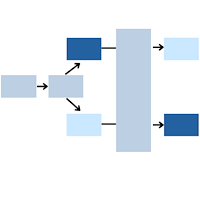
A randomly selected half get A followed by B and the other half gets B followed by A. This is generally referred to as the AB/BA design. Because each subject serves as their own control, you remove a large amount of variation. Often a cross-over trial can produce good results, even with a few dozen participants.
Cross-over trials require that the condition being studied is chronic in nature, and that the effect of the first treatment given does not carry over into the second treatment evaluation. There are important ethical and practical concerns about designing cross-over trials.
In this talk, you will see a review of the common tests used to analyze crossover data, followed by an analysis of the AB/BA crossover design. Then you will see how to account for the order in which the treatments were given.
Note: This training is an exclusive benefit to members of the Statistically Speaking Membership Program and part of the Stat’s Amore Trainings Series. Each Stat’s Amore Training is approximately 90 minutes long.
Leave a Reply